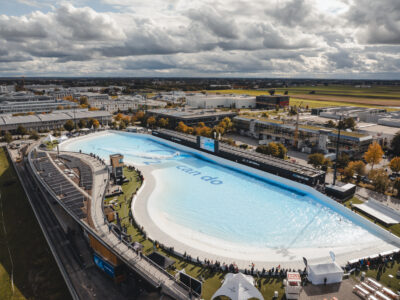

From waves per hour to cost per wave and from guest dwell time to machinery down time, there is certainly no shortage of metrics to measure when operating a surf park. So, what are the key metrics to be measuring and how do specific metrics play into a surf park’s overall success? Well, that’s not an necessarily easy question to answer as there are so many factors at play depending on an operation’s staffing, the venue location, guest demographics, local energy costs, and so much more…
To shed some light on this in-depth topic, we got together with operations expert Skip Taylor from Surf Park Management, an incredible resource for developers and investment groups that offers consulting and operations management services for those looking to build surf venues. Skip comes with an extensive background in lifestyle marketing and resort programming and has built Surf Park Management off his experiences and drive to make this emerging surf park industry more efficient and financially sustainable. (Learn more about Surf Park Management here)
In an extremely insightful conversation discussing the metrics that matter to surf parks, these are some key considerations for anyone who is serious about developing, operating, or investing in a surf park:
Business Modeling Metrics
The measurements start right off the bat when developing a surf park and talking to investors. It might seem like a no brainer, but it is important to be realistic about the financial limitations and burdens relating to rent, debt, financing, etc. Paying off these burdens is a priority and will ultimately be a limiting factor to a surf parks profit margins.
Skip suggests avoiding overlooking these “first step” metrics and stressed the importance of being honest with yourself about creating the right ROI model that is realistic to your business case. Attacking this from the get-go will set a good trajectory to aim for, plus will attract the right investors to aid you in the long term.
On Site and Operations Metrics
“Who can come when, seeking what experience, and at what price?”
Skip emphasizes the importance of asking yourself this question, as it is a fantastic place to start when entering the operations phase of managing a surf park. When fully considered, the question provides a holistic view of the surf park and its offerings to allow developers to fill in the gaps as needed, based upon the push and pull of other factors.
He states that “The goal, for the sustainability of a surf park, is to create as much diversified revenue as possible.”
Achieving this not only requires building these diverse streams into you planning, but also calls for measuring certain metrics and adapting as you operate. Let’s break the question down into three parts and add in some example metrics to be monitoring:
Who can come when?
- Guest Demographics
- Core, amateur, or beginner surfers?
- Families or groups of friends?
- Session Management
- Can surfers of differing skills surf at the same time?
- What wave offerings are available?
Seeking what Experience?
- Dwell Time within different areas of the venue
- Surfing, retail, lodging, etc.
- Equipment Management
- Rental inventory variety to ensure guest satisfaction on things like board sizes and wetsuits
- Guest Satisfaction (will they come back?)
- Exit Surveys
- Monitor reviews on yelp, TripAdvisor, etc.
At what cost?
- Technology metrics
- Energy costs depending on wave type produced
- Session capacities
- Maintenance costs
- Staffing
- Forecasting demand to avoid under or overstaffing
- Average daily revenue per customer
- Where are they spending? (surf, retail, f&b, etc.)
Pool Technology Considerations
In addition to the common measurements of waves per hour, cost per wave, and zone capacity, there are two areas that do not get valued enough when it comes to technology considerations, and how those ultimately affect a surf park’s metrics. First, flexibility is a key player in this, as a surf pool with flexible operations capabilities can allow for guests of differing abilities to surf within the same session – allowing families to book sessions together and not have to separate, a factor that oftentimes discourages booking altogether. Second, reliability is crucial when it comes to minimizing unexpected downtime, which is a major hinderance to revenue and guest satisfaction metrics.
Forecasting Metrics
The best approach to weathering the “storms” of a business is to build upon historical data, forecast the future, and pivot as needed. Although surf parks do not have a ton of historical data to work from, being a relatively new industry, there are still plenty of data points to measure to start gaining insight into day-by-day trends, eventually working into week by week, year by year, and so on…
In addition, simply looking at future bookings can make all the difference in your profit margins. For example, when you notice two weeks of unusually low bookings a couple months out, you could strategically run a promotion to fill slots that target trends you have noticed from similar days/weeks in the past.
Knowledge is Power
Skip says it best in that, “What gets measured gets managed” and that “We don’t want to have paralysis by analysis.” The information that a surf park gets from measuring some of these key metrics is incredibly powerful in being able to strategically shape the future of a surf park’s success. Proper metric monitoring allows venues to validate what they are doing, or to adapt to changing scenarios. Ultimately, knowledge is power, so be sure to use it to your advantage.
Have a question for Skip Taylor? Reach out to him and the team at Surf Park Management at skip@surfparkmanagement.com
Want to learn more about the technology metrics behind Endless Surf?
We will make sure you can make an informed decision for your surf park’s technology.